Normality is a paved road. It’s comfortable to walk but no flowers grow.

Vincent Van Gogh

Hey there, 

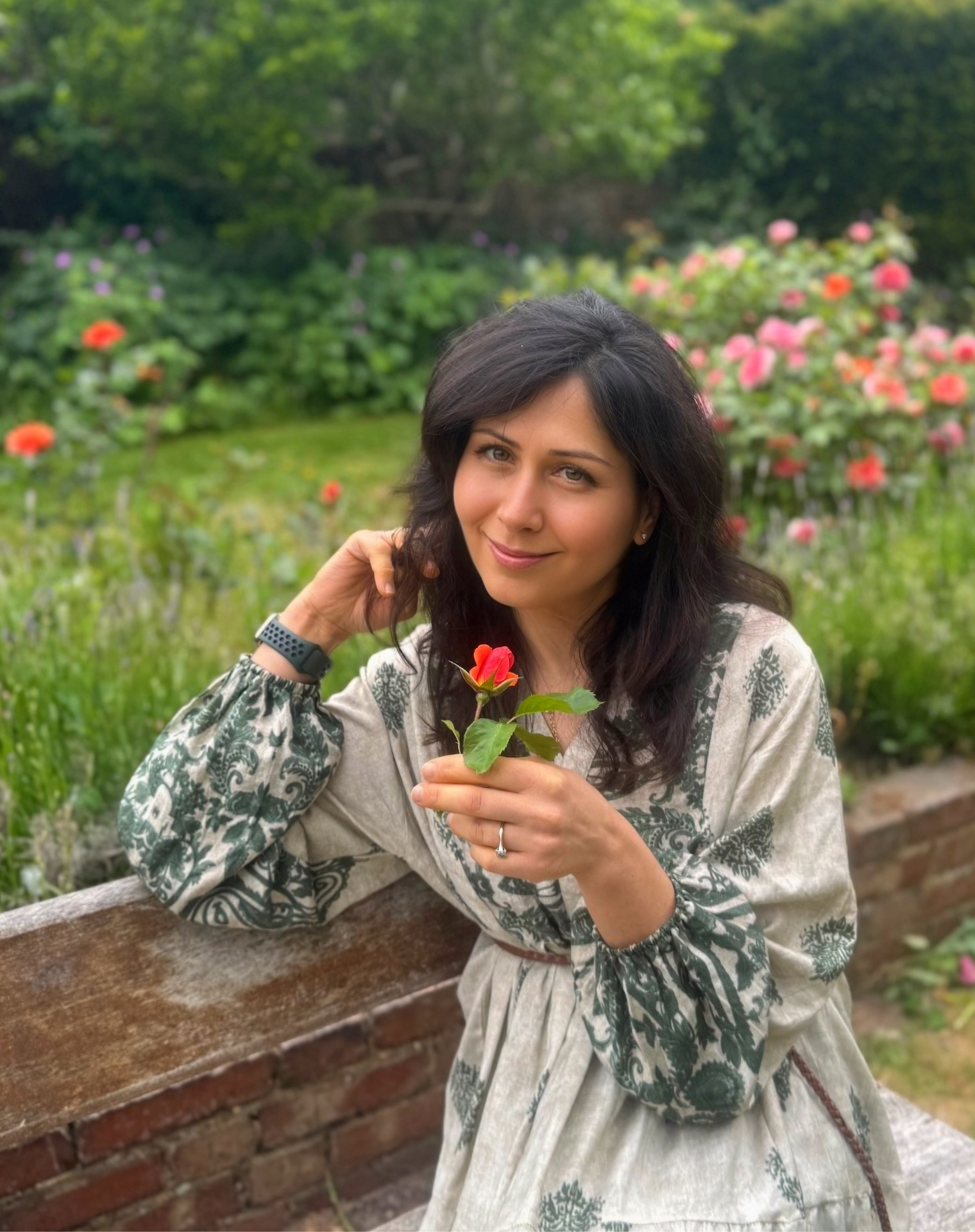
I’m Snezhana!

At the age of 15, I developed a rare genetic disorder that brought on a myriad of symptoms, including awkward movements, clumsiness, and a speech impediment. These challenges affected me mentally and emotionally, especially at a time when I was changing schools and trying to make new friends.

Somehow, I found strength to cope with all the symptoms, but one.

Slurred and incoherent speech made it hard for me to communicate with those around me. I often saw the struggle on my friends’ faces as they tried to understand me. Other times, they would simply move on with the conversation without grasping what I was saying, and sometimes, they would ignore me entirely. Over time, my once bubbly and chatty personality got replaced by a withdrawn and quiet demeanour. I retreated into myself, began to avoid social situations of all kinds and developed fear of talking to people.

At school, my way of speaking became something others mocked. I could see the laughter, the whispers, the way they imitated me. But what hurt the most was when even my English teacher said he was giving me a B—not because of my work, but because of the way I spoke.

My confidence plummeted to the ground. I just wanted to disappear. I stopped raising my hand in class and did everything I could to avoid speaking.

Over time, retreating into my shell became my new normal. And my choices in life became governed entirely by my fear of speaking.

I chose to pursue a career as a Software Engineer—not out of a passion for coding, but because I believed it was a profession that would let me work behind the scenes, away from constant social interactions. And to some extent, that was true.

However, I paid a heavy price. Over the 12 years I worked as a Software Engineer, I developed severe anxiety and lived in a constant state of stress. I knew I wasn’t good enough at what I was doing and felt like a complete imposter.

Unknowingly, I had turned my life into a living hell. I struggled to communicate or express myself, both at home and at work. My job, one that I neither enjoyed nor excelled at, only added to my anxiety. I became a ball of nerves, constantly stressed and overwhelmed by a sense of inadequacy, unsure of my abilities and trapped in a situation that drained me mentally and emotionally.

Despite all of that, I had hope. Deep in my heart, I knew that I was strong and determined individual, and can make things better for myself somehow. So I dived into self-development books and courses. I saw speech therapists, attended accent and vocal classes in the effort to improve my speech. I read books on anxiety, fear, self-confidence and began to  put into practice everything I discovered in them. However, there was this one concept that kept resurfacing again and again. And that was Mindfulness. Practitioners claimed that Mindfulness can help me decrease my anxiety and realise my true worth, at the same time significantly improving my self confidence.

The luckless bird is standing on the scorching desert sand, wilting in the heat, and seems to have absolutely no chance of doing anything to improve the situation on its own. Little short legs make it hard to hike away, and as a flightless bird it cannot use its wings to finally find, somewhere, anywhere, cool, refreshing water. Poor penguin. How on earth did it end up in the desert? It can never, will never feel happy here. But is it the penguin that has something wrong with it, or simply that its surroundings are unsuitable?

Dr Eckhart von Hirschhausen

So I decided to fully commit to the practices of mindfulness and meditation.

And to my surprise, realizations and results gradually began to emerge. I started to notice the insecurities of those around me and realized that, after all, I wasn’t an ugly duckling in a lake full of swans. In truth, most people—if not all—carry their own doubts and vulnerabilities.

I began to feel a deep sense of gratitude, realizing that despite all my challenges, I had perfectly capable legs and arms. I could hear the birds chirping outside my window and see the beauty spreading across the horizon, reminding me of the blessings I often took for granted.


Perhaps one of the most significant realizations I had was that, despite having perfectly good eyesight, I had become somewhat blind over time. I failed to notice that as my treatment progressed, my speech had become much clearer and more coherent. Instead, I clung to the belief that it was just as slurred as before.


Suddenly, I had an epiphany—more often than not, we are the ones who impose limitations on ourselves. We trap ourselves in self-built prisons, blind to the fact that the door is wide open, and at any moment, we have the power to step out. .

We often delude ourselves into a false reality.

And the only way to change that, is to develop awareness of ourselves and our surroundings. And this is where mindfulness comes in.

Over the years, I have attended CBT and various talking therapies, read a myriad of books, and completed countless exercises in an attempt to manage my anxiety and fear and improve my self-confidence. While some of these methods offered slight relief, their effects were only temporary.

Mindfulness, however, felt different—like a shortcut, a key that unlocked the solution to all my problems. It wasn’t just another technique; it was a fundamental shift in how I experienced life, bringing a sense of clarity and peace I had never known before.

Mindfulness helped me realise my true passion, which is writing. So I finally gathered the courage to abondon my career of 12 years as a Software Engineer and now every day I get to do what I absolutely love – write and read.

“In today’s rush, we all think too much, seek too much, want too much– and forget the joy of just being.”

Eckhart Tolle